“California Farmers Backed Trump, but Now Fear Losing Field Workers,” read the headline on a New York Times story last week. Big agribusiness types in the Golden State who thought President Trump would reduce regulation and taxes are now coming to grips with the fact that his executive orders on immigration could destroy their business model, which relies on the availability of workers who are not in the country legally. And, no, the wages these farmers pay to radicchio pickers aren’t high enough to lure underemployed working-class citizens to the fertile fields of the Central Valley. Still, farmer Joseph Marchini hopes that because Trump is a businessman himself, he’ll somehow understand that farmers’ massive investments in agriculture rest on the status quo. “I’m confident that he can grasp the magnitude and the anxiety of what’s happening now,” Marchini told the Times.
“I would rarely leave the White House because there’s so much work to be done,” Trump told a reporter in 2015. “I would not be a president who took vacations. I would not be a president that takes time off… You don’t have time to take time off.”
Earlier Saturday, Trump played golf with Abe — marking the second time he hit the links since his January 20 inauguration. Trump repeatedly criticized President Obama for golfing during his presidency:
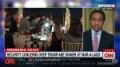
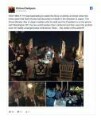
While Trump’s reckless handling of Saturday’s North Korea missile test crisis from a dining table at Mar-a-Lago raised concerns, one club member — Richard DeAgazio, the guy who snapped the above photos with Bannon and Trump’s nuclear football handler — applauded his conduct.
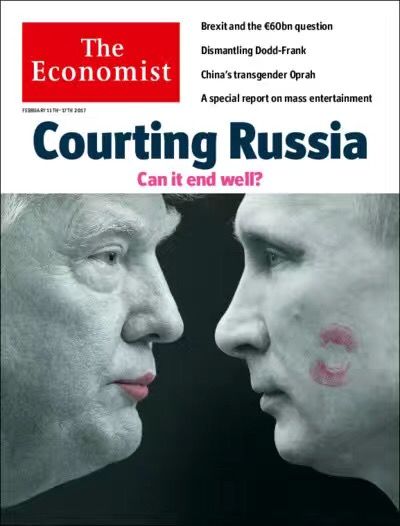
“It is obviously the case that the point of the Muslim ban is to instruct Americans that Muslims are an enemy: a small, well-assimilated minority that we are supposed to see not as our neighbors or as fellow citizens but as elements of an international threat,” Snyder said. He added, “More than that, Trump’s policy is a provocation, which is probably meant to provoke an event like the assassination of the German diplomat Ernst Eduard vom Rath on November 7 1938.”
“There’s no excuse for letting an international crisis play out in front of a bunch of country club members like dinner theater,” Representative Nancy Pelosi, the Democratic leader in the House, said in a Twitter message. Discussions about how to respond to international incidents involving adversaries like North Korea are almost always conducted in places that have high-tech protections against eavesdropping, like the White House Situation Room. When presidents are away from the White House, they often conduct important business in a “Sensitive Compartmented Information Facility,” or SCIF, a location that can be made temporarily impervious to eavesdropping.